 Pass
PassConstruction Vehicles Prohibited
Where: This sign is displayed on any public road, lane, path, or designated area where construction vehicles are not permitted to enter or operate. It is commonly found at the entrances to residential neighbourhoods, city centres, or business districts where heavy vehicle movement is restricted; on roads or bridges that cannot safely accommodate large or heavy construction vehicles; in pedestrian areas, school zones, or environmentally sensitive locations; and at completed construction sites or restricted access zones where such vehicles are no longer allowed.
Purpose: The purpose of this sign is to prohibit construction vehicles (such as excavators, graders, tippers, concrete mixers, or other heavy machinery) from proceeding beyond the point where the sign is displayed. This restriction helps to protect public safety by preventing large, slow-moving vehicles from entering busy or narrow roads, preserve infrastructure that may not be designed to support heavy equipment, reduce road wear, dust, and noise pollution in sensitive or residential areas, and control access so that only authorised vehicles operate within designated work zones.
Action Required by Driver: If you are driving or operating a construction vehicle, do not proceed beyond this sign. Use alternative access routes or designated haul roads approved for construction traffic, and look out for supplementary signs that may specify time restrictions, permit requirements, or temporary access allowances. Non-compliance with this restriction may result in fines, penalties, or site access suspension.
- Do not proceed — construction vehicles may not pass beyond the sign.
- Use approved haul roads — stick to access routes designated for construction traffic.
- Check for supplementary signs — these may show time restrictions or permit requirements.
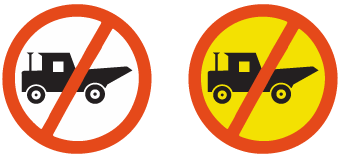
Abnormal Vehicles Prohibited
Where: This sign is displayed on any public road, lane, path, or designated area where abnormal vehicles are not permitted to enter or travel. It is typically found at the entrance to bridges, tunnels, or narrow roadways where oversized vehicles cannot safely pass; on urban streets, residential areas, or city centres not designed for heavy or wide loads; along routes with height, width, or weight restrictions; and in environmentally sensitive zones or restricted transport corridors where large vehicle movement is limited.
Purpose: The purpose of this sign is to prohibit abnormal vehicles — vehicles that exceed the legal limits for mass, height, width, or length — from proceeding beyond the point where the sign is displayed. This restriction is enforced to protect public infrastructure, such as bridges, pavements, and tunnels, from potential damage caused by oversized loads, ensure the safety of other road users by preventing congestion or collisions caused by large or slow-moving vehicles, maintain smooth traffic flow in areas unsuitable for abnormal loads, and direct heavy or abnormal traffic to approved and specially designated abnormal load routes.
Action Required by Driver: If you are driving or transporting an abnormal vehicle or load, do not proceed beyond this sign. Follow the approved abnormal load route as indicated by your route permit or transport authority, and ensure you have the necessary permits and escort arrangements before operating on public roads. Ignoring this restriction may result in severe penalties, vehicle impoundment, or damage to infrastructure.

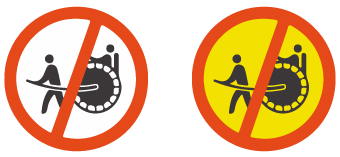
Rickshaws Prohibited
Where: This sign is displayed on any public road, lane, path, or designated area where rickshaws (hand-pulled or pedal-powered) are not permitted to enter or operate. It is commonly found at the entrance to high-traffic roads, city centres, or pedestrian zones; on lanes or roads reserved for motor vehicles or cyclists; near schools, construction zones, or environmentally sensitive areas; and in restricted areas where rickshaw traffic could interfere with safety or traffic flow.
Purpose: The purpose of this sign is to prohibit rickshaws from entering a specific area. This restriction is enforced to protect pedestrians and cyclists from potential accidents caused by rickshaws, maintain smooth traffic flow in busy or narrow streets, ensure safety in areas not designed for rickshaw traffic, and protect infrastructure from potential wear caused by frequent rickshaw use in sensitive zones.
Action Required by Driver: If you are pulling or riding a rickshaw, do not proceed beyond this sign. Look for alternative routes or areas where rickshaws are permitted. Non-compliance may result in fines, penalties, or enforcement action. Note: This sign applies to all types of rickshaws, whether hand-pulled or pedal-powered.